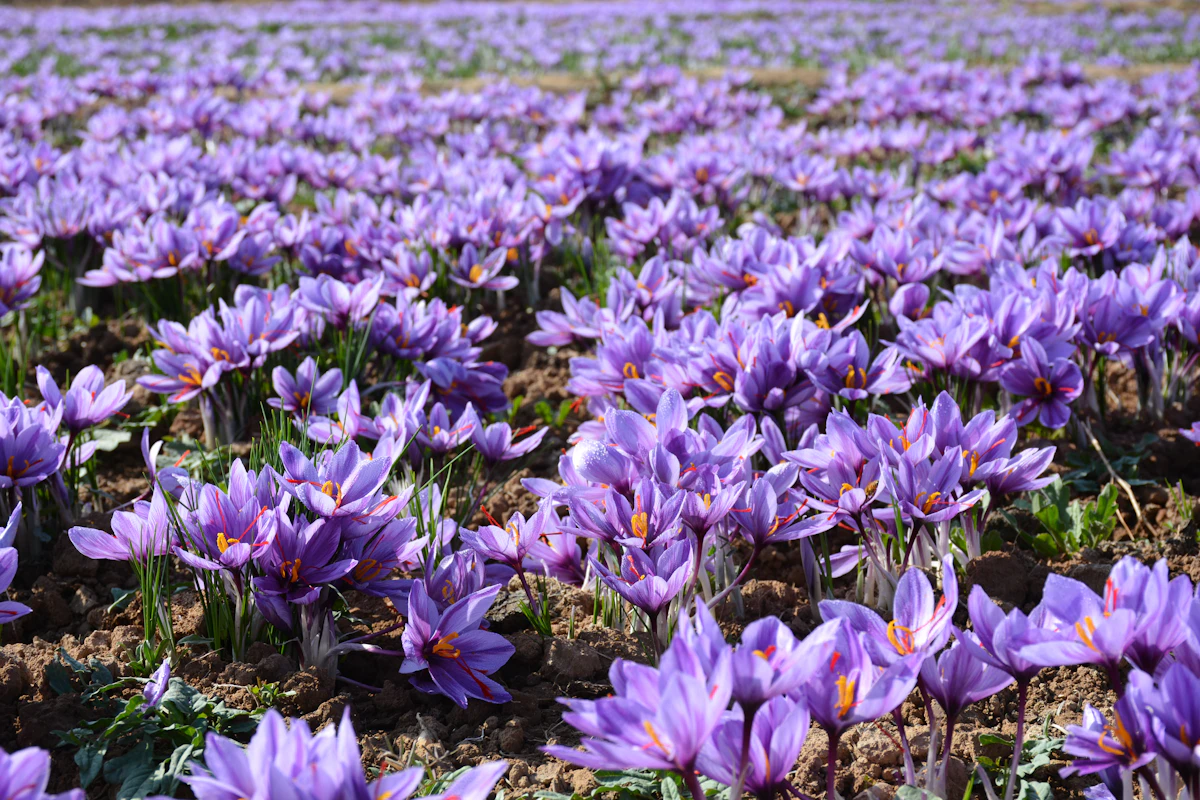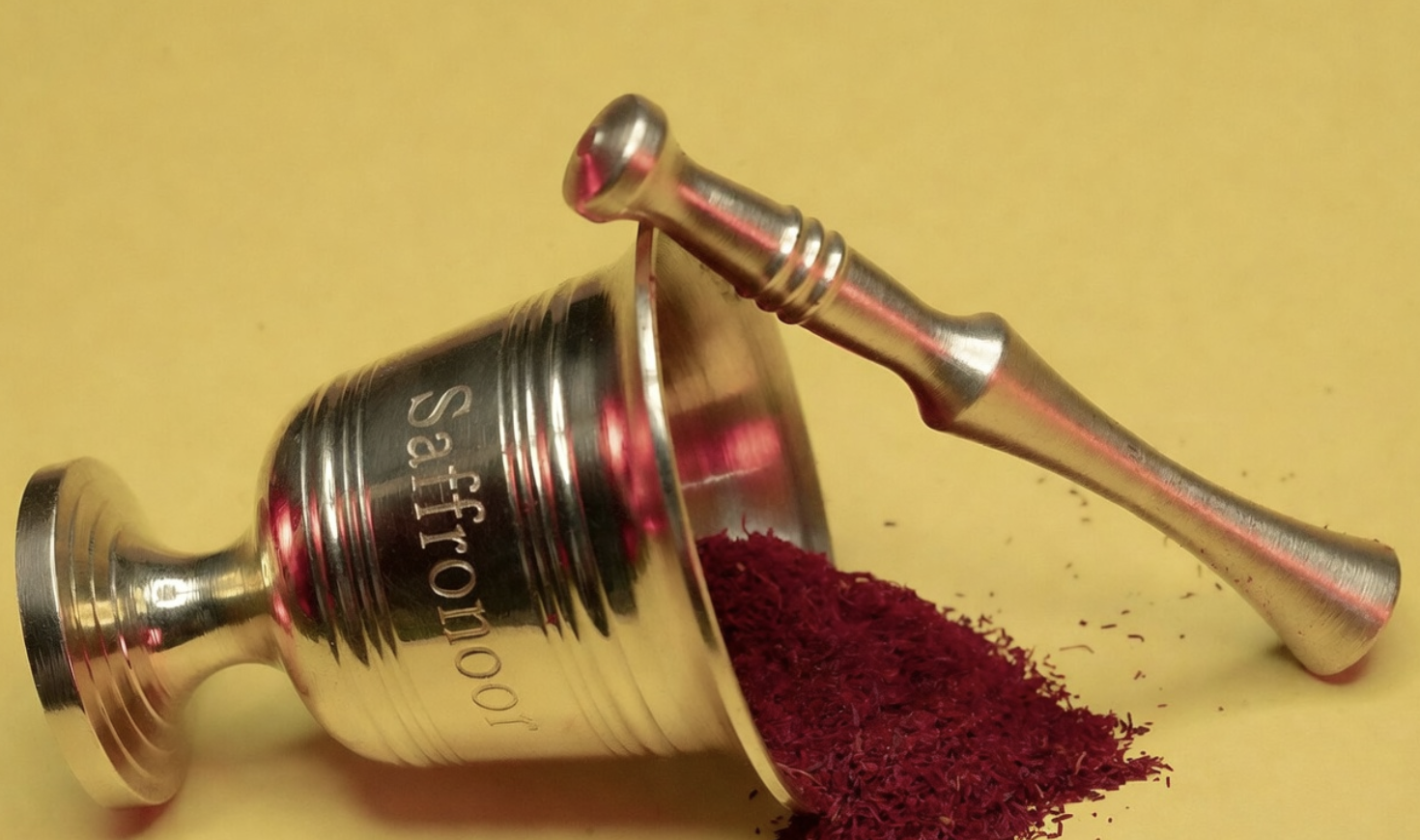
Saffron is the most expensive spice on earth by weight — routinely trading at $5,000–$10,000 per kilogram for top grades. That price tag makes it the most adulterated ingredient in the global food supply. Studies by food-safety authorities in the EU, UK, and India consistently find that 30–40 % of saffron sold at retail is either diluted, substituted, or outright fake.
The good news: you don't need a lab to catch most fraud. These seven tests use only what you already have at home.
Infographic — 7 Tests at a Glance: Real vs Fake
| # | Test | Real Saffron | Fake / Adulterated |
|---|---|---|---|
| 1 | Cold Water | Slow golden bleed over 15–30 min | Instant red/orange bleed |
| 2 | Taste | Slightly bitter, hay-like | Sweet or flavourless |
| 3 | Price | ≥ $10 / g retail | Under $3 / g |
| 4 | Thread Shape | Trumpet-flared tip, jagged edge | Uniform strands, blunt ends |
| 5 | Smell | Earthy, honey, hay, floral | Chemical, sweet, or odourless |
| 6 | Flame | Burns slowly, charcoal smell | Burns fast, chemical smell |
| 7 | Baking Soda | No change in water colour | Artificial dye shows soapy colour shift |
Test 1: The Cold Water Test
Place two to three threads in a glass of cold (not warm) water and observe. Real saffron releases its golden Crocin pigment slowly — the water starts to turn faintly gold after five minutes and reaches full colour in 15–30 minutes. The threads themselves should remain red throughout; only the water turns gold.
Fake saffron dyed with safflower, marigold, or artificial colourants bleeds immediately and turns an unnatural orange or red. The thread loses all colour almost instantly, leaving a pale, spent strand in orange-red water.
“If your saffron turns the water red in under two minutes, it's not saffron.”
Test 2: The Taste Test
Chew a single thread. Genuine saffron is slightly bitter and carries a distinctive hay-like, floral flavour with no sweetness. Adulterated saffron — commonly bulked with dyed corn silk, safflower petals, or artificial dye on generic strands — will taste sweet, neutral, or faintly chemical.
Test 3: Price Arithmetic
This is the single fastest filter. Super Negin saffron sells for a minimum of $8–12 per gram at wholesale and $12–18 per gram at quality retail. Anything cheaper is either:
- A lower grade (Bunch/Pushal) sold as premium
- Diluted with cheaper spices
- Entirely synthetic
A 1 g jar priced at $2–3 should be an immediate red flag. The maths simply do not work for genuine product at that price.
Infographic — Price Benchmarks by Grade
Test 4: Thread Shape
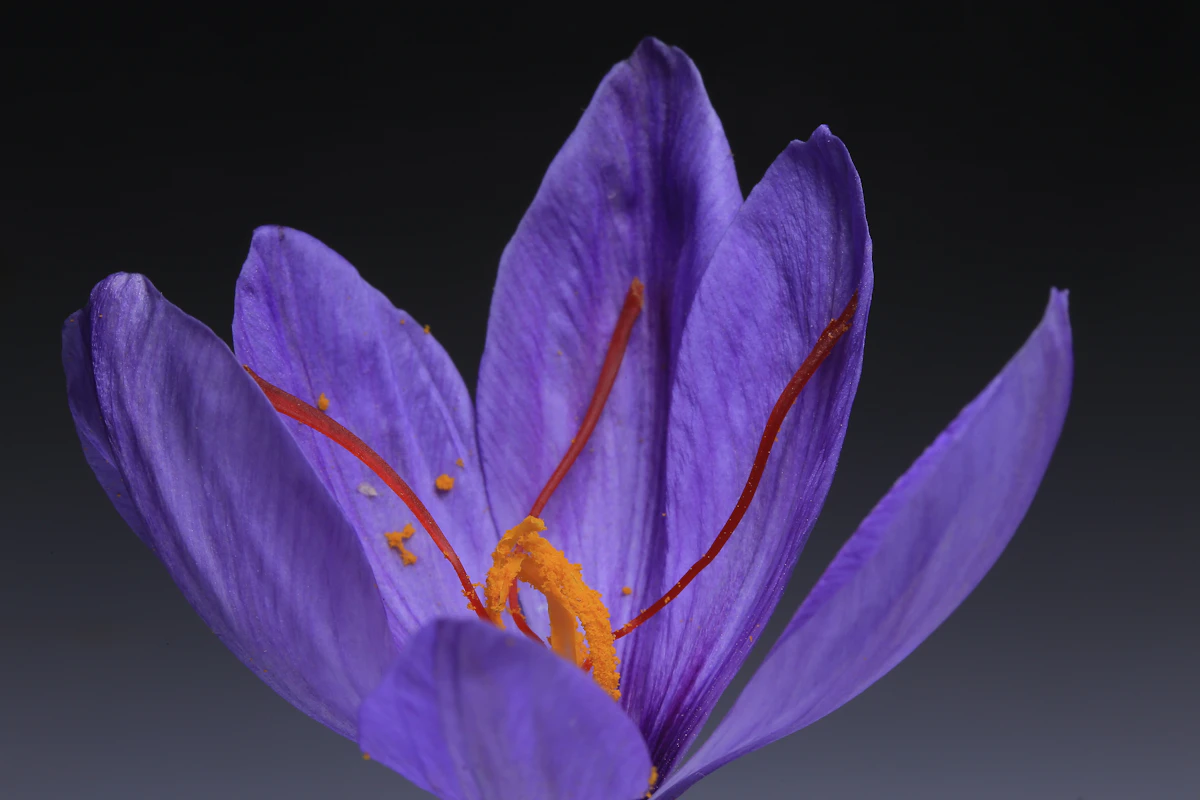
Real saffron stigmas are recognisably trumpet-shaped: thin at the bottom (where they attach to the style) and slightly widened, ruffled, and jagged at the tip. This is the stigma. Under a magnifying glass, the tip looks almost frayed or feathered.
Corn silk — one of the most common adulterants — has a uniform diameter from end to end and smooth, parallel fibres. Safflower petals are flat, wide, and orange-red, bearing no resemblance to a saffron thread at all.
Test 5: Smell
Open the container and inhale before purchasing if possible. Premium saffron has an unmistakable multi-layered scent: earthy, slightly honey-like, with floral top notes and a dry hay finish. Safranal — the key aroma compound — is both distinctive and persistent. If the jar smells of nothing, or smells sweet and candy-like, it is not genuine Super Negin saffron.
Test 6: Flame Test
Hold a thread with tweezers and pass it through a flame. Real saffron burns slowly, like a dried herb, and produces a faint charcoal-and-hay smell. Artificial dye-soaked threads catch quickly, may spark, and produce a chemical odour. Do this test away from the bulk of your product, obviously.
Test 7: Baking Soda Test (for Artificial Dyes)
Dissolve a small amount of baking soda (sodium bicarbonate) in the saffron-infused water from Test 1. If the water changes to a noticeably different colour — particularly towards blue or purple — artificial colourants (often tartrazine or sunset yellow) are present. Natural Crocin is stable in alkaline water and will not shift colour dramatically.
The Bottom Line
No single test is conclusive. A fraudster can pass the water test with slow-bleeding dye, pass the price test by charging more, and even mimic the scent with added safranal extract. But passing all seven tests is extremely difficult without genuine product — and a legitimate supplier will always provide a third-party Certificate of Analysis rather than relying on your home tests.